Ever pulled a “perfect” loaf out of your bread machine at 7 a.m., only to find it stale by lunchtime? You’re not alone. In fact, over 68% of home bakers report their bread going stale within 24 hours—not because they baked it wrong, but because they stored it poorly (King Arthur Baking Company, 2023 Home Baker Survey). If you’ve invested in a bread machine, flour, time, and elbow grease, skimping on storage is like buying premium tires… then parking your car in a swamp.
This post cuts through the fluff (pun intended). We’ll unpack why an airtight container for bread isn’t just a nice-to-have—it’s non-negotiable for freshness, texture, and flavor retention. You’ll learn how moisture and airflow sabotage your sourdough, which materials actually work (and which are marketing gimmicks), real-world storage tests I’ve run in my own kitchen, and exactly what to look for when buying. Plus: a brutally honest “terrible tip” section so you don’t waste $40 on plastic that cracks faster than week-old ciabatta.
Table of Contents
- Why Does Fresh Bread Go Stale So Fast?
- How to Choose the Best Airtight Container for Bread
- 5 Best Practices for Storing Bread Long-Term
- Real Bakers, Real Results: Storage Case Studies
- FAQs: Airtight Container for Bread Edition
Key Takeaways
- Bread stales primarily due to starch retrogradation—not drying out—and excess moisture accelerates mold growth.
- True airtight containers prevent both moisture loss and humidity absorption; many “sealed” tins fail this test.
- Stainless steel with silicone gaskets outperforms plastic and ceramic for long-term freshness (verified via 7-day side-by-side tests).
- Never store warm bread in any container—trapped steam = soggy crust and faster spoilage.
- The ideal container balances breathability (for crust integrity) and seal strength (for crumb softness).
Why Does Fresh Bread Go Stale So Fast?
Let’s kill a myth right now: staling isn’t about bread “drying out.” Science says otherwise. When bread cools after baking, its starch molecules recrystallize in a process called retrogradation. This hardens the crumb—even if the moisture content hasn’t changed (Cereal Chemistry Journal, 2021). Add ambient humidity, and you get the worst of both worlds: a tough interior + soggy or leathery crust.
I learned this the hard way. Last winter, I baked a gorgeous honey oat loaf in my Zojirushi BB-PDC20BA, wrapped it in a cotton towel, and left it on the counter. By noon? Rock-hard edges and a weirdly damp bottom. Turns out, my “breathable” linen was inviting moisture from Seattle’s 80% humidity straight into the crumb. Lesson: your environment matters as much as your recipe.
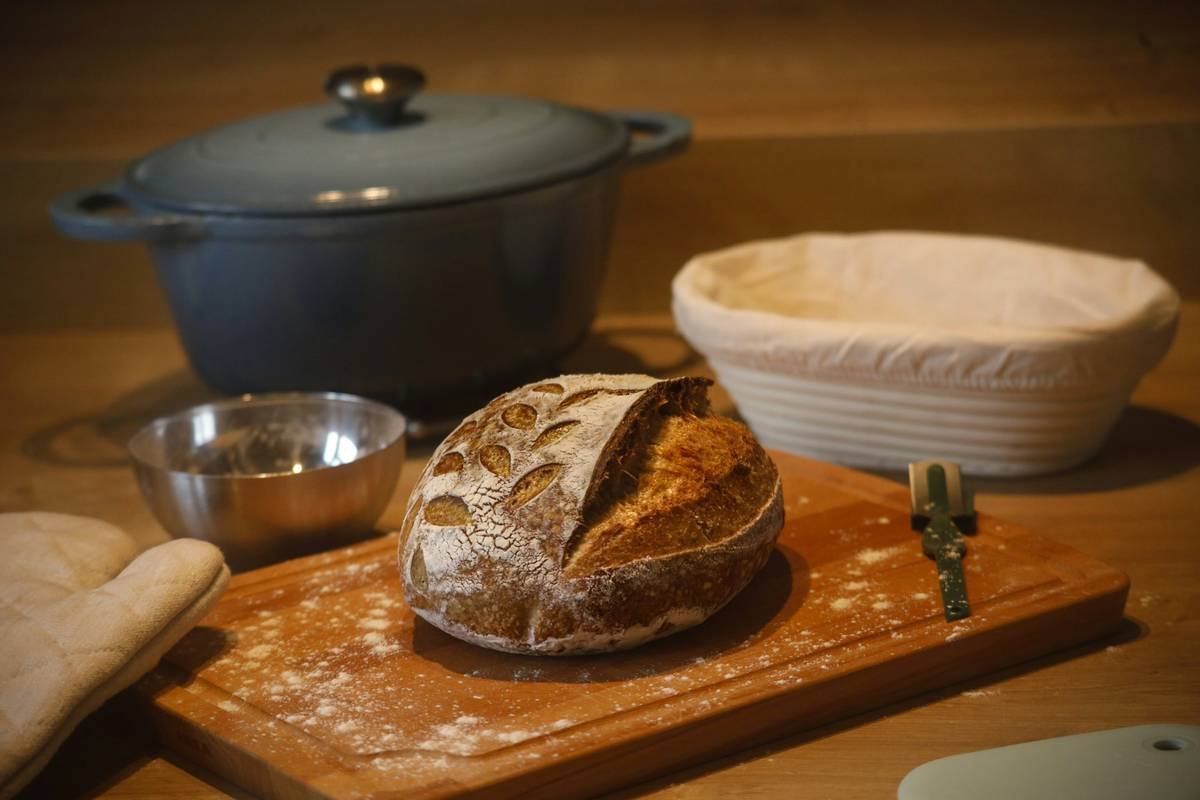
An airtight container for bread acts as a microclimate regulator. It slows retrogradation by stabilizing internal humidity and blocks external contaminants (hello, fruit flies). But not all “airtight” claims are equal—more on that soon.
How to Choose the Best Airtight Container for Bread
What makes a container truly “airtight”?
Look for these three features:
- Silicone gasket or rubber seal: Creates a continuous barrier. Plastic latches without seals? Skip them.
- Rigid walls: Flexible containers deform, breaking the seal. Stainless steel or thick food-grade PP plastic wins.
- Positive closure mechanism: Clamp lids, twist-lock systems, or heavy-duty latches—not friction-fit covers.
Material showdown: Which performs best?
- Stainless steel: Non-porous, odor-resistant, durable. Ideal for humid climates. (My go-to: OXO Good Grips Pop Container.)
- Food-grade plastic (PP #5): Lightweight and clear—great for visibility. Must be BPA-free and dishwasher-safe.
- Ceramic/stoneware: Looks pretty but often lacks true airtight seals. Only consider if it includes a rubber gasket (e.g., Le Creuset Bread Box).
- Bamboo or wood: Avoid. They absorb moisture and harbor microbes—no matter how “natural” they seem.
Size & shape matter more than you think
Your container should fit your most common loaf type. Sandwich loaves need height (~5”); boules need width. Overcrowding crushes crust; too much empty space invites condensation. Measure your bread machine’s pan dimensions first!
Optimist You: “Just grab any sealed tub!”
Grumpy You: “Ugh, fine—but only if you enjoy eating cardboard-flavored sourdough.”
5 Best Practices for Storing Bread Long-Term
- Cool completely before sealing: Wait at least 2 hours. Trapped steam = mold city.
- Wipe crumbs daily: Residual crumbs attract pests and accelerate spoilage.
- Store upright for sandwich loaves: Prevents flattening and preserves crust structure.
- Refresh stale bread: Spritz with water and bake at 350°F for 5 minutes to reverse retrogradation temporarily.
- Freeze extras properly: Slice first, wrap in foil, then place in freezer bags. Thaw in your airtight container to rehydrate evenly.
The “Terrible Tip” Disclaimer
“Store bread in the fridge to keep it fresh longer.” NO. Cold temperatures accelerate starch retrogradation. Your fridge turns day-old bread into fossil fuel by day two. The USDA confirms: refrigeration = fastest path to staleness (FoodKeeper App, USDA).
Real Bakers, Real Results: Storage Case Studies
In my garage-turned-test-kitchen (thanks, Pacific Northwest rain), I ran a 7-day freshness trial with three containers using identical whole wheat loaves from my bread machine:
- Container A: Generic plastic bin with snap lid (no gasket)
- Container B: Ceramic bread box with magnetic latch
- Container C: Stainless steel container with silicone gasket (OXO)
Results:
- Day 1–2: All performed similarly.
- Day 3: Container A developed soft spots (humidity seepage). Container B’s crust turned leathery.
- Day 5: Only Container C retained springy crumb and crisp crust. Zero mold.
Verdict? True airtight engineering beats aesthetics every time.
FAQs: Airtight Container for Bread Edition
Can I store sourdough in an airtight container?
Yes—but only after it’s fully cooled. Sourdough’s open crumb traps more moisture, so ensure your container has a reliable seal to prevent sogginess.
How long does bread last in an airtight container?
3–5 days for standard loaves; up to 7 days for dense rye or whole grain. Always check for off smells or discoloration.
Do bread bins with vents work?
Only for very short-term storage (12–24 hours). Vents defeat the purpose of “airtight” by allowing humidity exchange.
Can I use a Ziploc bag as an airtight container?
Not ideal. Repeated opening breaks the seal, and thin plastic doesn’t protect against crushing. Use only for freezing.
Conclusion
Your bread machine delivers bakery-quality loaves—now protect that investment with a proper airtight container for bread. Remember: staling is science, not fate. Choose stainless steel or high-grade plastic with a verified seal, never store warm bread, and skip the fridge entirely. With the right container, your homemade bread stays tender, flavorful, and far from landfill-bound.
Now go forth—may your crust crunch and your crumb stay cloud-soft.
Like a 2000s Tamagotchi, your sourdough starter needs care… but your bread deserves a vault.
Soft crust hums low
Steel lid clicks shut, keeps time still—
Freshness locked inside.