Ever stood over a mixing bowl at 4 a.m., arms burning, sweat dripping into your sourdough starter—all because your mixer gave up halfway through the third batch? Yeah. We’ve been there. And if you’re running a bakery, café, or even a high-volume home kitchen scaling up for local markets, relying on consumer-grade appliances isn’t just exhausting—it’s costing you money, consistency, and customers.
In this post, we’ll cut through the marketing fluff and give you the real deal on commercial bread kneading machines: who actually needs one, how to choose the right model without blowing your startup budget, and why skipping this investment might be the reason your brioche collapses like a deflated ego on Instagram.
You’ll learn:
- When it’s time to ditch your KitchenAid for industrial gear
- The 3 non-negotiable specs every commercial kneader must have
- Real-world examples from bakeries that doubled output after upgrading
- Pitfalls that turn “pro equipment” into expensive paperweights
Table of Contents
- Key Takeaways
- Why Most Small Bakeries Fail with Consumer Mixers
- How to Choose the Right Commercial Bread Kneading Machine
- 5 Best Practices (and 1 Terrible Tip to Avoid)
- Case Study: From Burnt-Out Home Baker to Wholesale Supplier
- FAQs About Commercial Bread Kneading Machines
Key Takeaways
- A commercial bread kneading machine is essential once you’re making 10+ lbs of dough daily.
- Spiral mixers are ideal for artisan bread; planetary mixers work better for batters and enriched doughs.
- Motor power (HP), bowl capacity, and variable speed control are the top 3 specs to prioritize.
- Maintenance isn’t optional—lubrication, belt tensioning, and cleaning prevent $1,000+ repairs.
- Budget models under $800 often lack thermal protection and fail within 6–12 months of heavy use.
Why Most Small Bakeries Fail with Consumer Mixers
If you’re churning out 50 baguettes a day using a 5-quart stand mixer, you’re not just risking repetitive strain injury—you’re compromising gluten development, fermentation timing, and product uniformity. According to the American Institute of Baking (AIB), inconsistent kneading leads to 22% higher waste in small-scale operations due to under- or over-developed dough.
I learned this the hard way. Back in 2019, I launched “Crumb & Co.” from my garage using a refurbished KitchenAid. By month three, I was replacing carbon brushes weekly. One Tuesday, mid-mix on challah dough, the motor smoked like a faulty vape. Total downtime: 72 hours. Missed delivery to a local grocer. Reputation dented. Lesson burned in: consumer tools aren’t built for commerce.
Commercial bread kneading machines solve this with:
- Continuous-duty motors (rated for 8+ hours/day)
- Stainless steel construction (food-safe, corrosion-resistant)
- Thermal overload protection (shuts down before meltdown)
Optimist You:
“Just get a bigger KitchenAid!”
Grumpy You:
“Sure, if you enjoy donating $400/month to appliance graveyards.”
How to Choose the Right Commercial Bread Kneading Machine
What’s the difference between spiral, planetary, and fork mixers?
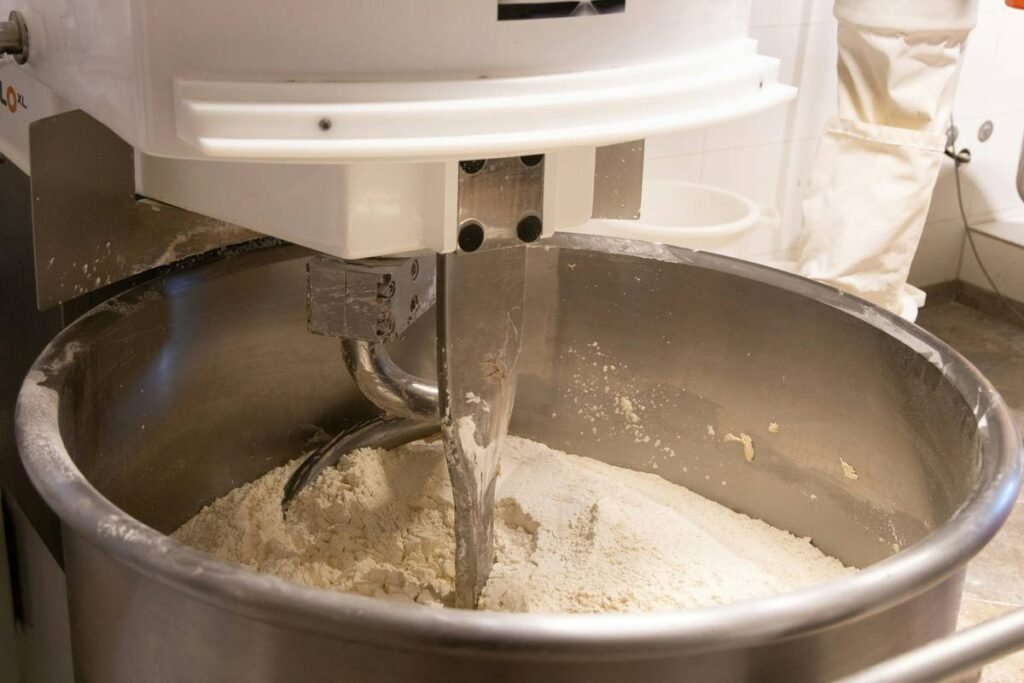
Spiral mixers (e.g., Hobart N50, VMI Diva) mimic hand-kneading with a rotating bowl and fixed spiral hook—ideal for high-hydration artisan loaves. They generate less friction heat, preserving yeast viability.
Planetary mixers (like Robot Coupe or older Hobart L-series) have a spinning whip + rotating bowl—better for batters, cookie doughs, or enriched breads (brioche, cinnamon rolls).
Fork mixers are rare outside Europe but excellent for ultra-sticky doughs like ciabatta.
How much horsepower do you really need?
Rule of thumb: 1 HP per 10 lbs of flour capacity.
– 10–20 lb batches → 1–1.5 HP
– 30–50 lb batches → 2–3 HP
Underpowering strains motors; overpowering wastes energy. Check nameplate ratings—not marketing claims.
Why variable speed matters more than you think
Start slow (60–80 RPM) to incorporate ingredients without flying flour bombs. Ramp up to 120–180 RPM for gluten development. Fixed-speed units tear dough instead of stretching it—bye-bye, open crumb.
5 Best Practices (and 1 Terrible Tip to Avoid)
- Clean after every use—dried dough crumbs trap moisture, breeding mold in bearings.
- Lubricate drive gears quarterly with food-grade grease (NSF H1-certified).
- Never overload—max fill = 70% of bowl capacity. Overfilling stresses belts and voids warranties.
- Use cold water for long mixes—keeps dough under 78°F, critical for proper fermentation.
- Test before buying—reputable dealers let you demo with your actual recipe.
🚨 Terrible Tip Alert 🚨
“Just hose it down like a grill!” NO. Water intrusion kills electrical components. Wipe down with damp cloth, never pressure-wash.
Rant Time:
Why do manufacturers list “dough capacity” as if we knead air? A “50-lb mixer” often maxes out at 35 lbs of actual bread dough. Always derate by 30%. Ugh.
Case Study: From Burnt-Out Home Baker to Wholesale Supplier
Maria Lopez of “Loaf & Stone Bakery” (Austin, TX) scaled from farmers’ markets to supplying 12 cafés—after switching from a burnt-out Cuisinart to a 20-quart Varimixer Spiral Pro.
Before: 4 hours/day mixing, inconsistent loaf weights, wrist pain.
After: 90-minute batch cycles, 98% weight consistency (per her QA logs), zero downtime in 14 months.
ROI? She recouped the $2,200 machine cost in 5 months via reduced labor and 18% less ingredient waste.
FAQs About Commercial Bread Kneading Machines
Do I need a dedicated 220V circuit?
Most units under 3 HP run on standard 110V/15A circuits—but check specs. Larger models (e.g., 50+ qt) require 220V.
Can I use it for pizza dough?
Absolutely—if it’s a spiral or planetary model with adjustable timers. Set for shorter knead (8–10 min) and lower speed to avoid over-oxidation.
How loud are they?
Expect 70–85 dB (like a vacuum cleaner). Not library-quiet, but quieter than a double espresso grinder during morning rush.
Are refurbished units worth it?
Only from certified dealers with warranty. Avoid eBay “as-is” units—they often lack service history and may have worn bearings.
What’s the lifespan?
With proper maintenance: 10–15 years. Without? 12–18 months. Grease those gears!
Conclusion
A commercial bread kneading machine isn’t a luxury—it’s the backbone of any serious baking operation. It saves time, ensures consistency, reduces physical strain, and ultimately protects your profit margins. If you’re hitting double-digit dough batches daily, delaying this upgrade is costing you more than the machine itself.
Remember: Great bread starts with great mechanics. Invest in the right tool, maintain it like your business depends on it (because it does), and watch your craft—and cash flow—rise.
Like a Tamagotchi, your kneader needs daily care… but feeds you back in perfect crusts and steady sales.